Rhinoplasty & Revision Rhinoplasty in NYC
4.9/5 Face-Focused Practice
with Dr. Nigar Ahmedli, MD
Double Board-Certified Facial Plastic Surgeon
Stylish and Beautiful Nose Job in NYC
For patients seeking refinement, balance, and precision without losing their identity.

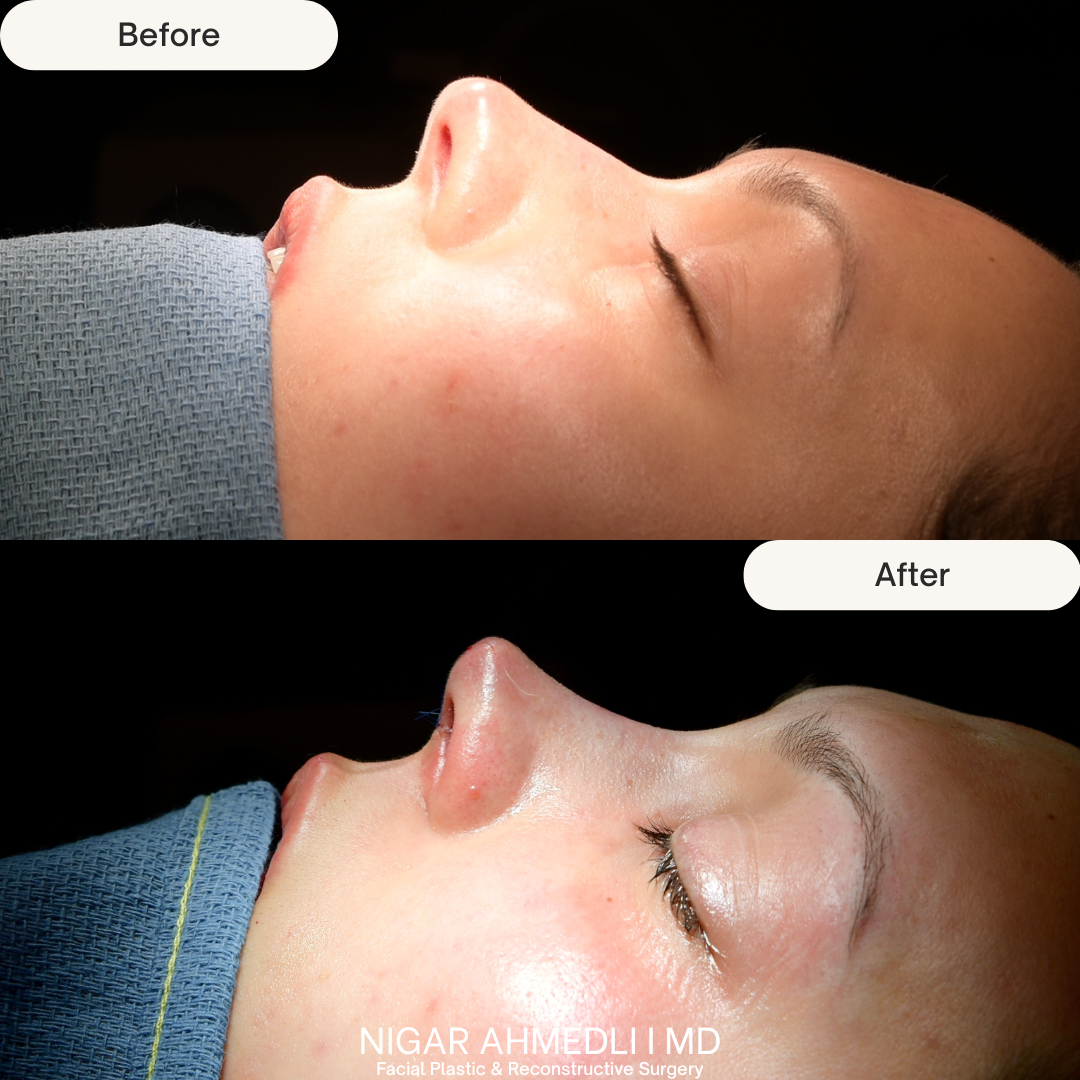
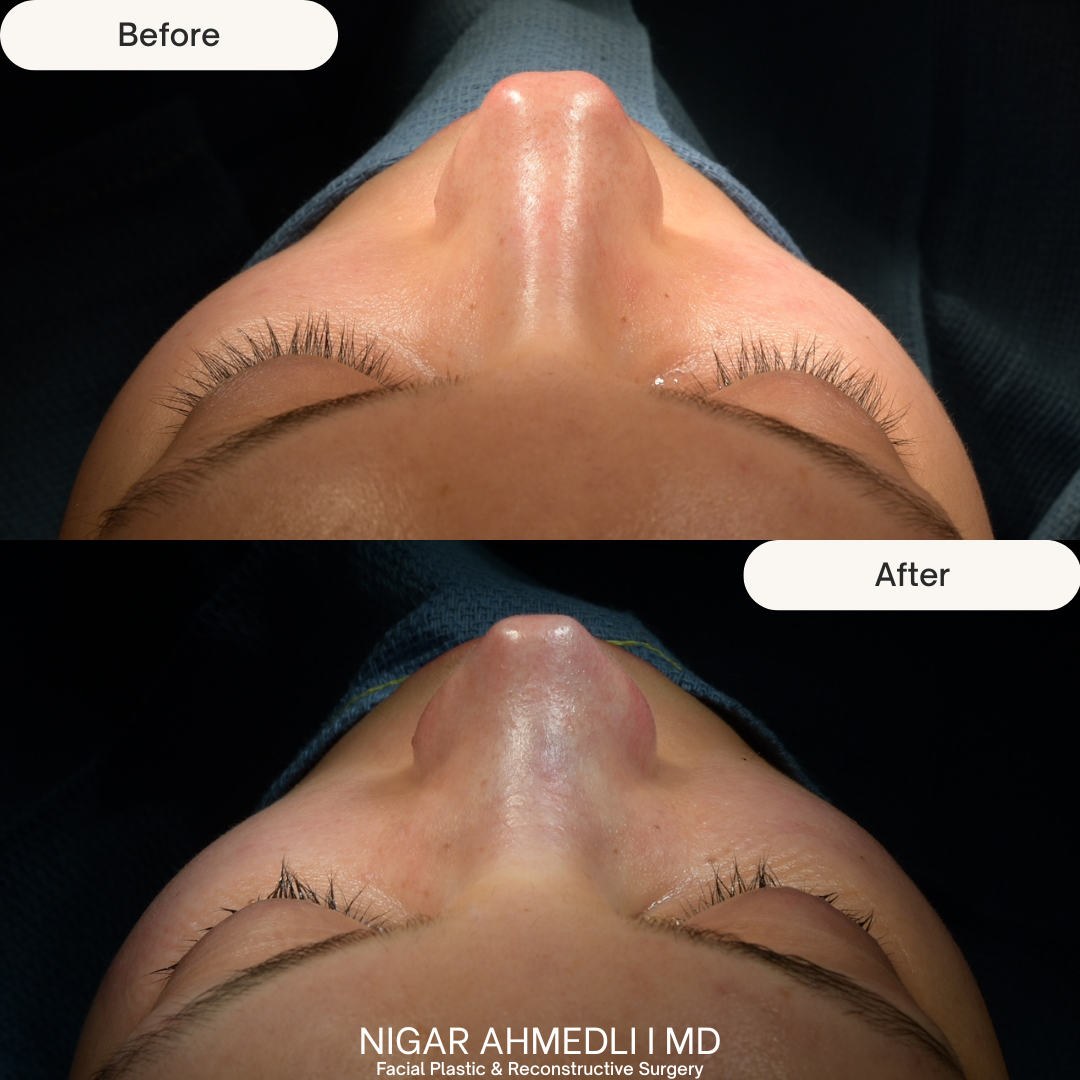
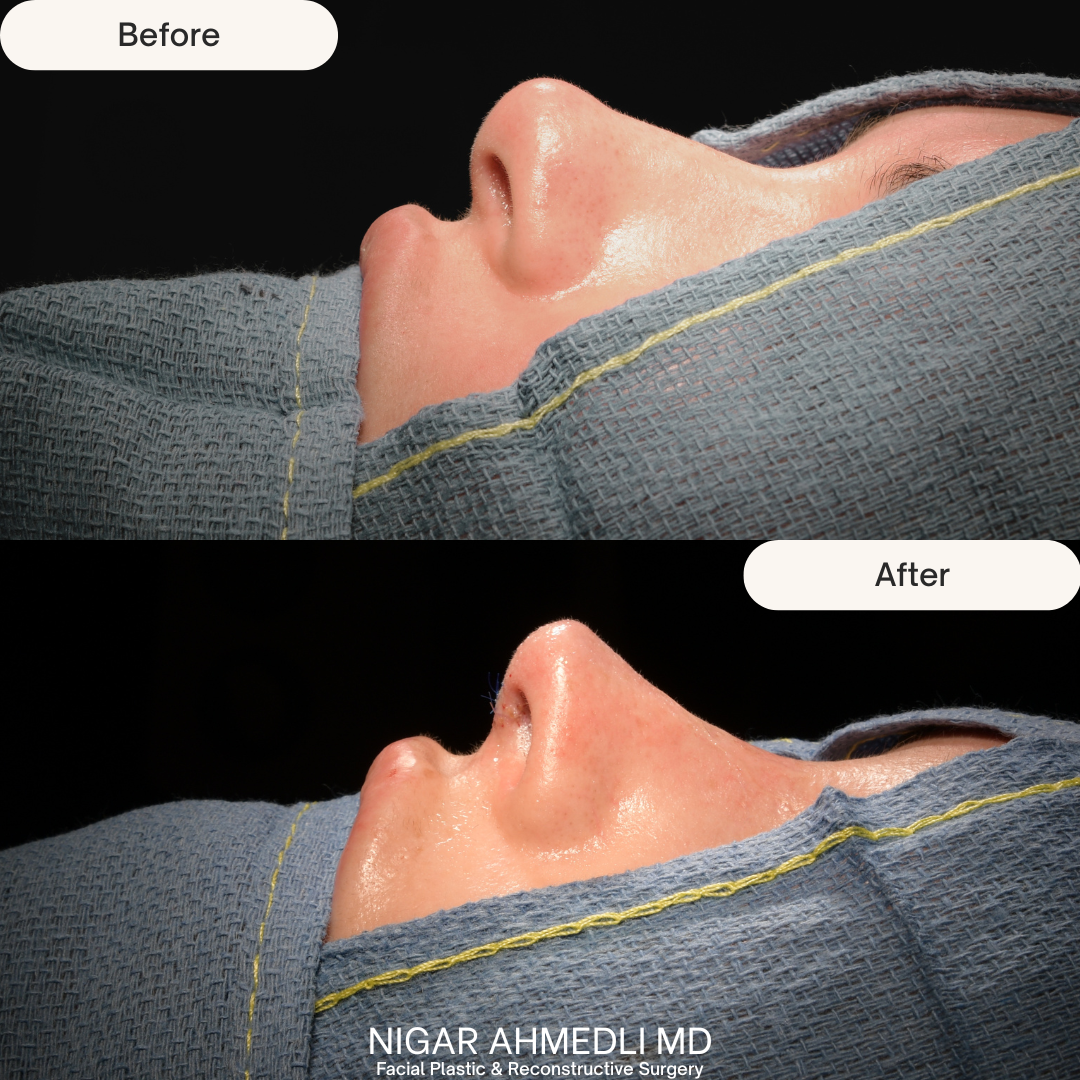
Rhinoplasty FAQ
A curated set of high-intent questions about primary rhinoplasty, revision rhinoplasty, ultrasonic rhinoplasty, cartilage grafting including MTF cartilage, and common aesthetic goals. Left column: candidacy, expectations, and decision-making. Right column: technique, grafting, and recovery.
Good candidates are patients whose goals make sense for their anatomy and who understand that rhinoplasty is about refinement, balance, and long-term healing, not instant perfection.
In consultation, Dr. Ahmedli evaluates your facial proportions, skin thickness, nasal structure, breathing, prior trauma or surgery, and the specific changes you want. The best plan is one that respects both aesthetics and function.
Primary rhinoplasty is a first-time nose surgery. Revision rhinoplasty is performed after prior nasal surgery and is often more complex because anatomy has already been altered, support may be weaker, and scar tissue is usually present.
Revision cases require a more careful risk-benefit discussion and often a more structural approach. The goal is improvement, not perfection, and thoughtful planning matters even more.
You can absolutely describe the look you are drawn to, but the right rhinoplasty plan has to fit your face, your skin, and your anatomy. A nose that looks appealing on one person may look artificial or unstable on another.
Dr. Ahmedli focuses on elegant, attractive noses with good lines, good support, and good breathing. The goal is not to chase a trend, but to create a result that looks beautiful and believable on you.
It should be planned with breathing in mind from the start. In many cases, functional improvements can be made at the same time as cosmetic refinement, especially when there is septal deviation, valve weakness, or prior collapse.
A well-planned rhinoplasty respects internal support. A nose that looks refined but does not breathe well is not a good result.
Because rhinoplasty is one of the most nuanced operations in facial plastic surgery. It requires judgment, restraint, and technical precision.
- Double board-certified facial plastic surgery expertise.
- Careful attention to both form and function.
- A refined aesthetic approach designed to avoid obvious or overdone results.
- Access to the same high-touch, luxury-level patient experience of the practice.
Ultrasonic rhinoplasty uses precision instrumentation to shape nasal bone more delicately and accurately than traditional tools in selected cases. It allows controlled contouring rather than simply fracturing bone in a less refined way.
It is not a marketing gimmick when used appropriately. It is one of several modern tools that can help achieve a more precise result with less unnecessary trauma.
MTF cartilage refers to processed donor cartilage used in selected rhinoplasty cases, especially when additional structural support is needed and the surgeon wants to avoid taking more of your own cartilage from another area.
It can be helpful in revision rhinoplasty and reconstruction, but its use depends on the specific needs of the nose. The decision is individualized and based on anatomy, goals, and the level of support required.
Not every patient needs grafting, but many rhinoplasties benefit from structural support. Grafts can help improve contour, support the tip, stabilize the airway, and make the result more durable over time.
Possible sources may include your septal cartilage, ear cartilage, rib cartilage, or donor cartilage such as MTF in selected situations. The choice depends on what the nose needs, not on a one-size-fits-all formula.
Most patients are socially presentable relatively early, but true rhinoplasty healing takes much longer than people think. Swelling improves in stages, and refinement continues for many months.
Revision rhinoplasty often takes even longer to settle because the tissues have already been operated on before. Patience is part of the process, and early healing never represents the final result.
Revision rhinoplasty is harder because normal landmarks may be distorted, cartilage may be missing or weakened, scar tissue is usually present, and both aesthetic and breathing issues often need to be addressed at the same time.
That is why revision surgery typically requires more planning, more structural thinking, and a very honest discussion about what is realistically achievable.